News from

TREY RHODES
Georgia House Representative
State House District 124
News From Under The Gold Dome
NEWS FROM UNDER THE GOLD DOME
February 2, 2026

Representative
Trey Rhodes
State House District 124
News From Under The Gold Dome
Legislative News
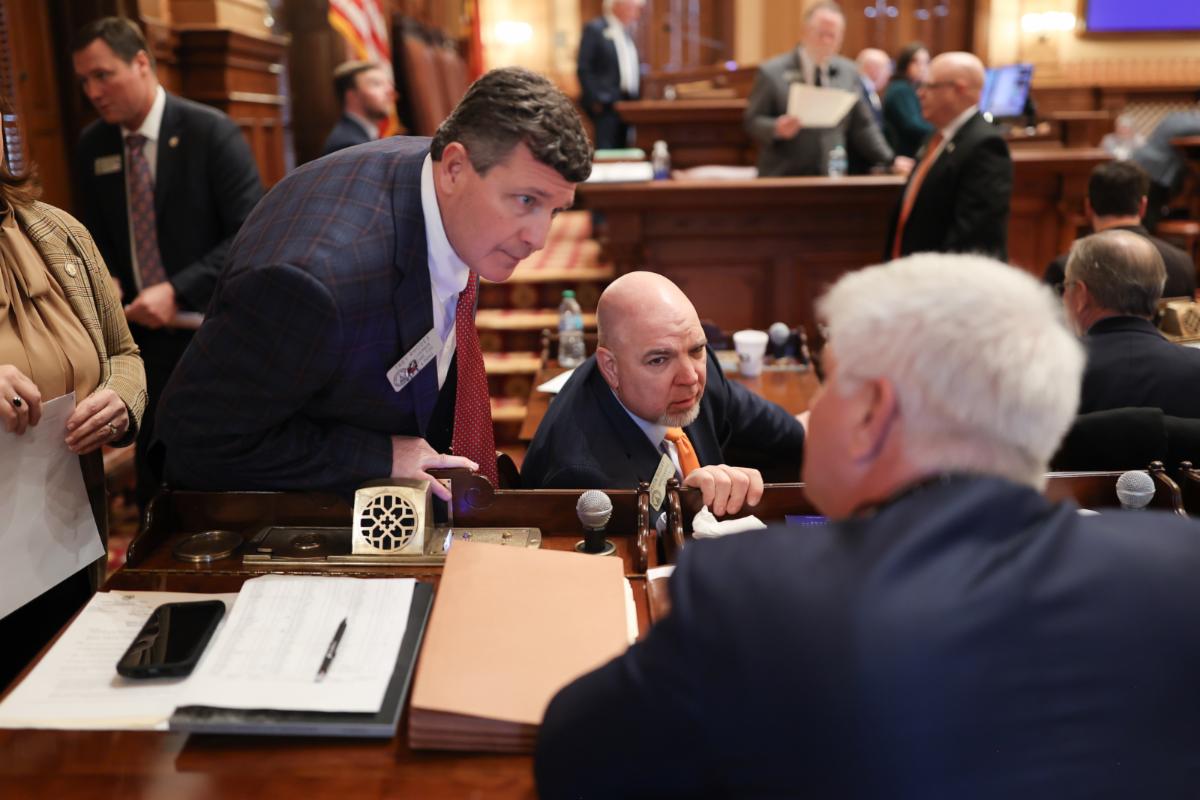
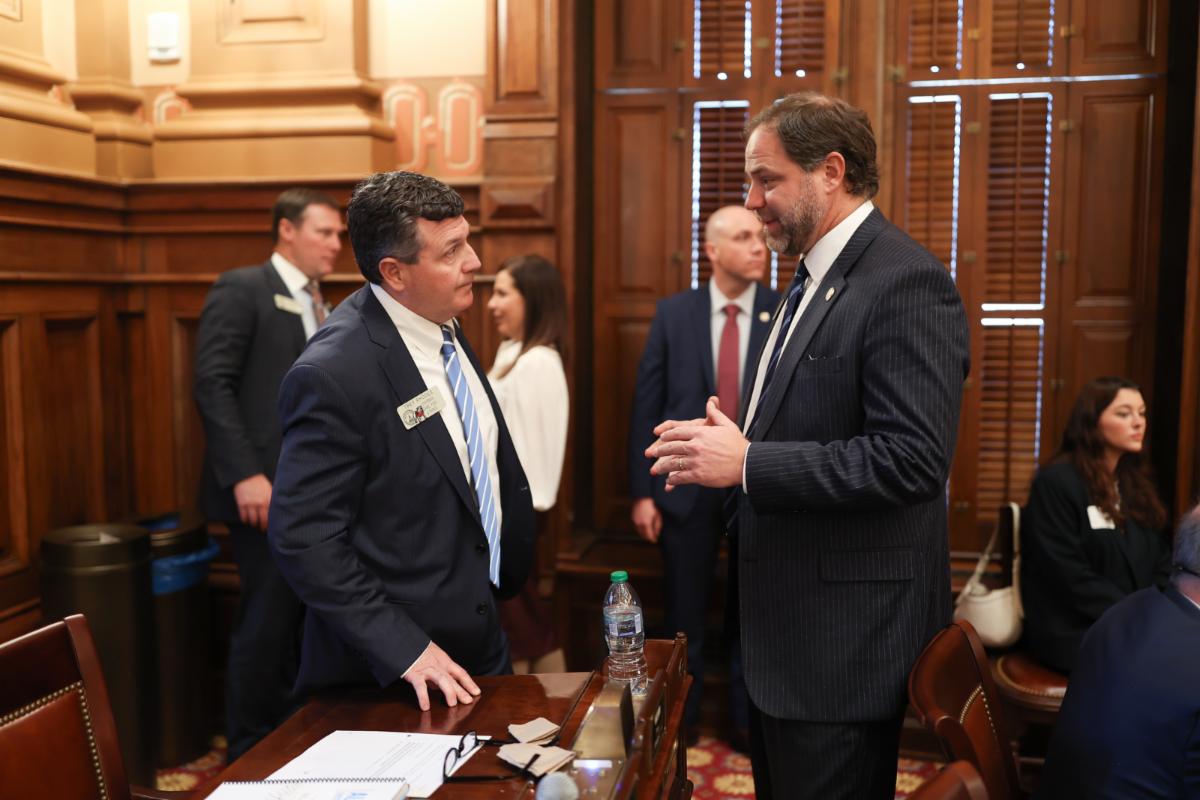
The Georgia House of Representatives began the third week of the 2026 legislative session on Monday, January 26, with a pro forma session due to Governor Brian Kemp’s State of Emergency declaration after Winter Storm Fern swept across much of North Georgia over the weekend. As soon as road conditions improved, my colleagues and I returned to the State Capitol on Tuesday to resume our legislative business. Throughout the remainder of the week, several House Appropriations subcommittees continued to meet to review specific portions of the Amended Fiscal Year 2026 (AFY 2026) and Fiscal Year 2027 (FY 2027) budget proposals. Other House committees were hard at work this week, holding meetings to take up legislation that was not passed or signed into law during the 2025 legislative session and is still eligible for consideration, as well as newly introduced legislation. The House Rules Committee also convened this week for the first time this session to consider legislation and set our first Rules Calendar and subsequent floor vote. By the week’s end, we passed and adopted our first pieces of legislation of the session in the House Chamber.
With the joint meetings of the House and Senate Appropriations committees now behind us, House Appropriations subcommittees began meeting to examine individual sections of the budget proposals in greater detail and assess state agency funding needs more closely. I will continue to keep you informed about both budget bills and provide updates on other important measures as they move through the legislative process.
On Wednesday, the House voted on and passed its first bill of the 2026 legislative session—House Bill 443. This legislation, introduced last session, would establish an annual fee for reef or migratory fish endorsements for Georgia recreational fishing licenses. Requested by coastal fishermen, HB 443 seeks to have Georgia DNR collect enough data on both recreational and commercial offshore fishing, as do some other states, to support our state taking over the regulation of our state waters. HB 443 would set an annual fee of $10 for Georgia residents and $20 for non-residents who participate in offshore fishing, and all funds would be retained by the Department of Natural Resources (DNR).
With our first Rules Calendar of the session, the House unanimously adopted House Resolution 1008 this week. The resolution would ratify amendments to Georgia’s comprehensive statewide water management plan.
In response, the State Water Council adopted amendments in December 2025 and submitted them to the General Assembly on January 12, 2026, with HR 1008 serving as the ratifying legislation. Specifically, HR 1008 would reduce the number of council member appointments, eliminate alternate members, and extend appointment terms from three years to six years. The resolution would also require each council to include at least one representative from each major water and wastewater demand sector, including municipal, industrial, agricultural, and energy interests. HR 1008 was adopted with unanimous bipartisan support and has been sent to the Senate for consideration. These efforts also aligned with the General Assembly’s own focus on water policy as the House Special Committee on Resource Management Water Subcommittee held numerous meetings across the state during the fall of 2025 to study Georgia’s water challenges and their impact on the state’s economic development.
While the House conducted its legislative business on the floor, our counterparts in the Senate gave final passage to legislation carried over from last session—the first bill of the 2026 legislative session to receive final passage from the General Assembly. If signed into law, SB 148 would bring several updates to Georgia’s public schools. The bill would:
· Allow local school boards to offer hunting safety lessons for students in grades six through 12, and DNR would help the school boards develop this curriculum using its existing hunting education courses. This provision of the bill seeks to promote safety and responsibility among students who participate in this popular outdoor activity.
· Establish an outdoor learning center pilot program for elementary and secondary schools to enhance educational environments by encouraging students and teachers to utilize learning opportunities beyond the traditional classroom
· Increase the number of personal days public school personnel may use from accumulated sick leave from three to five days
· Remove the requirement for a physician to oversee automated external defibrillator (AED) programs in schools, which would make it easier for schools to obtain and use these life-saving devices in emergency situations.
Also, this week, House Speaker Jon Burns held a press conference where he announced one of his legislative priorities for the 2026 legislative session—the Georgia Homeownership Opportunity and Market Equalization (HOME) Act of 2026, or House Bill 1116. The bill would enable the full elimination of homestead property taxes, or taxes on primary residences, by 2032 and would provide tools for local governments to make up for lost revenue. To help offset potential revenue losses, the legislation would authorize an optional, flexible five-penny local sales tax, as well as optional local assessments and fees. It would also cap revenue growth at three percent for non-improved, non-exempt properties, establish a homeowner tax relief grant, and double the statewide homestead exemption every other year until 2032, providing phased-in tax relief for Georgia homeowners. HB 1116 was filed this week, and I’ll be sure to update you on its progress.
The House will reconvene on Monday, February 2, and will be in session through the end of the week on Friday. The pace of the session is expected to accelerate as committees continue to advance legislation and more measures come before the full House for floor votes. This is the time of year when much of the foundational work of the session takes shape, and long days of meetings and floor votes become the norm. I encourage you to stay updated on future session proceedings and committee meetings—all live streamed on the House website located here.

MY COMMITTEES

- Game, Fish & Parks - Chairman
- Banks & Banking
- Economic Development & Tourism
- Special Rules
- State Planning & Community Affairs
- Ways & Means - Secretary
STAY CONNECTED
Capitol Address
228-A State Capitol
Atlanta, GA 30334
404.656.5099 - Office
District Address
1051 Ben Hammond Drive
Greensboro, GA 30642
Exit Strategies | Piedmont Avenue | Atlanta, GA 30308 US
Unsubscribe | Update Profile | Constant Contact Data Notice
##########
Legislative News - January 20, 2026
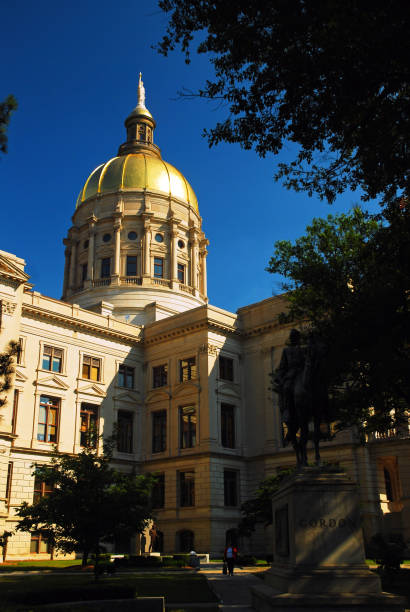
The Georgia House of Representatives convened on Monday, January 12, 2026, for the first day of the 2026 legislative session, marking the start of the second regular session of the 158th Georgia General Assembly. As we gathered together again, the House celebrated the first day of the 2026 session with a special performance by Audrey Kittila, Miss Georgia 2025, who delivered a violin rendition of “Georgia on My Mind,” which may be viewed here. The performance was a great way to begin the session and set the tone before the House took up the business for the day.
We moved on with our session business Monday as the House voted to adopt House Resolution 998, the Adjournment Resolution establishing the legislative calendar for the entire 2026 legislative session. Georgia’s Constitution requires the Georgia General Assembly to convene for 40 non-consecutive legislative days, and the final day of this year’s session—also known as “Sine Die”—is scheduled for Thursday, April 2, 2026. With the goal of ensuring a smooth and efficient legislative process, this calendar provides a clear schedule for the session, allowing legislators, staff and visitors to plan ahead as we conduct the people’s business.
On Wednesday morning, members of the General Assembly attended the Georgia Chamber of Commerce’s annual Eggs & Issues breakfast, where Gov. Kemp gave a preview of some of his priorities for the year. He announced plans for a one-time $35 million natural gas infrastructure fund through the Georgia Environmental Finance Authority and proposed major transportation projects, including $1.8 billion for I-75 Henry County Express Lanes, $200 million for Highway 316—University Parkway, $250 million for local roads and $100 million for rural bridge improvements. The governor also unveiled a one-time $50 million Homeless Response Grant to support efforts ahead of the 2026 FIFA World Cup in Atlanta.
Later in the week on Thursday, members of the House and Senate gathered in the House Chamber for a joint session to hear the governor deliver his final State of the State Address as Georgia’s 83rdgovernor. Given annually, the address provides the governor an opportunity to share their assessment of the state’s condition and outline their legislative priorities for the year ahead. Gov. Kemp’s final address centered on lowering the cost of living for Georgians, while also prioritizing education, workforce training, school safety, strengthening retirement security for law enforcement and intensifying efforts to combat human trafficking and gang-related crime across Georgia. A video archive of the address is available here, and below is an overview of the key highlights.
Gov. Kemp began his final address by reflecting on the state’s finances, noting that since 2021, Georgia has delivered more than $3.2 billion in one-time tax relief, nearly $1 billion in property tax relief, more than $2.2 billion through motor fuel tax suspensions and nearly $3.4 billion in permanent income tax savings—totaling almost $9.7 billion—returned to Georgians. Gov. Kemp’s remarks also focused on the continued impact of rising costs on Georgia families and businesses, emphasizing that his budget proposals are a direct response to those pressures. To provide additional relief, he announced that his budget proposals include a fourth one-time $1 billion tax rebate—averaging $250 for single filers and up to $500 for married couples—bringing the total surplus revenue returned to taxpayers over the next four years to more than $7.5 billion. He also noted plans to propose a 20-basis-point reduction to the state’s personal and corporate income tax rate, lowering it to 4.99 percent.
The governor’s address also highlighted his continued investment in Georgia’s state employees and the state’s broader economic development efforts, reflecting his view that state government should serve all Georgians, regardless of party affiliation or zip code. He touted the work of state employees and also pointed to his Administration’s sustained focus on economic development and job creation, noting that over the past seven years Georgia has seen more than 219,700 new jobs and over $118 billion in investment through projects supported by the state’s economic development team, with many of those jobs and investment dollars directed to communities outside the metro Atlanta region. To further recognize the efforts of the state workforce, Gov. Kemp announced that his Amended Fiscal Year 2026 budget proposals include a one-time $2,000 pay supplement for state employees, including educators and state public safety officers.
After reflecting on the state’s finances and budgetary actions, Gov. Kemp highlighted his Administration’s efforts to improve Georgia’s education system and bolster our state’s education workforce. As part of these efforts, the governor announced that as of the current fiscal year, the state has fully funded the Quality Basic Education Act (QBE) seven times and added an additional $368 million to programs and initiatives to prepare Georgians for the workforce. Gov. Kemp then touched on the state’s efforts to support school safety. The governor noted that in his first year, the state began with three campus security grants, totaling more than $184.5 million, and since then, the state has added $109 million into the base budget with the objective of providing funds to improve safety in Georgia’s classrooms. Additionally, Gov. Kemp stated that his budget proposals would bring the total amount allocated to public safety during his time in office to more than $511 million. He then touted that during his tenure as governor, his Administration has raised teacher pay by $9,500—increasing the starting salary for a Georgia teacher by almost 28 percent.
Next, Gov. Kemp turned his focus to higher education and scholarship programs. Over the last several years, the Kemp Administration has returned the Helping Outstanding Pupils Educationally (HOPE) scholarship to 100 percent of its promise, while the Board of Regents has worked to hold tuition rates in check across the system to allow greater opportunity for students. Since approximately 2019, tuition in Georgia has increased by only five percent, which he highlighted as a success in comparison to other states. Gov. Kemp then announced that the state is putting an additional $2 billion toward higher education in Georgia, including $40.7 million in his budget proposals for healthcare education facilities and medical workforce training programs. Gov. Kemp stated that since he first took office, the state has spent more than $26 million for medical residency slots in Georgia, adding 897 positions, equaling 2,523 residency slots as of this fiscal year. His budget proposals add another $2.1 million to bolster this critical workforce need in our state.
Moving on to the state’s scholarship programs, the governor announced that his amended budget proposals support need-based financial assistance by investing $326 million into the University of Georgia’s Dedicating Resources to Educationally Advance More Students (DREAMS) scholarship program—the first needs-based scholarship of its kind in Georgia history. This scholarship program is a one-time endowment to create opportunities for generational economic advancement for students, with the goal of allowing students to complete college and begin careers without large student debt. The DREAMS scholarship complements the Georgia MATCH program, which was launched in 2023. During the first two years of MATCH, Gov. Kemp noted that the state has seen a 5.9 percent rise in University System of Georgia (USG) enrollment and a 7.1 percent increase in Technical College System of Georgia (TCSG) enrollment.
The governor also recognized the men and women who face danger on a regular basis to protect our communities, emphasizing how exceptional Georgia’s law enforcement officers are for answering the call to serve. To that end, Gov. Kemp proposed an enhanced retirement plan for state law enforcement officers. Under the proposed model, Georgia would provide a higher match to the 401(k) savings accounts of eligible public safety officers through a steeper contribution schedule, noting that not only would the state’s match increase at a higher rate, but the maximum percentage cap would also increase from nine percent under the current plan to 15 percent, essentially doubling the state’s contribution for its law enforcement. Building on these efforts to support and protect those who serve, the governor also highlighted the importance of safeguarding the most vulnerable in our communities, including children and victims of exploitation. As one of the Kemp Administration’s top priorities and building on the work of the GRACE Commission—led by First Lady Marty Kemp—the Georgia General Assembly has passed ten pieces of legislation targeting human trafficking. In his remarks, Gov. Kemp announced that his team will soon introduce an eleventh bill designed to further protect Georgia’s children and hold abusers accountable. The governor further emphasized that his continued efforts to fight human trafficking are matched by his ongoing initiatives to tackle gang-related violence, touting that since 2019, his office has funded the Anti-Gang Taskforce within the GBI—and since then, the GBI has investigated more than 1,800 gang-related cases, arrested nearly 2,500 offenders with a gang affiliation and seized more than $95 million in drugs and illegal items associated with gang violence. Gov. Kemp closed his remarks by reaffirming his commitment to finishing the important work underway and ensuring continued support for all Georgia families. Gov. Kemp’s proposals in his State of the State and Eggs and Issues addresses will certainly impact our work this legislative session.
To end the week, members of the General Assembly joined Gov. Kemp for a Celebration of Service event to honor the life and legacy Dr. Martin Luther King Jr. As we reflect on Dr. King’s mission, we are reminded of the enduring call to service that my colleagues and I strive to uphold as we continue working on behalf of our constituents and for the betterment of our great state. His legacy challenges all elected officials to lead with compassion and unity to ensure that our work at the Capitol continues to serve every Georgian.
Now that the 2026 legislative session is underway, I will spend much of the next three months at the Georgia State Capitol, working on behalf of my constituents and the needs of our community. Following the observance of the Martin Luther King Jr. holiday, my colleagues and I will return to the Capitol on Tuesday, January 20, to begin work on one of the most important responsibilities of this session: the state budget. During what is often referred to as “budget week,” we will hear directly from Governor Kemp and state agency leaders as they present their budget requests to the joint House and Senate Appropriations Committees. These committees will continue meeting throughout the week, and I look forward to providing updates as we work through the budget process in the House.
MY COMMITTEES
- Game, Fish & Parks - Chairman
- Banks & Banking
- Economic Development & Tourism
- Special Rules
- State Planning & Community Affairs
- Ways & Means - Secretary
STAY CONNECTED
Capitol Address
228-A State Capitol
Atlanta, GA 30334
404.656.5099 - Office
District Address
1051 Ben Hammond Drive
Greensboro, GA 30642